
Table of Contents
Night Train Travel in India: The Truth About What It Feels Like
An overnight train journey through India isn’t only about travelling from one city to the next. It’s about having a conversation with strangers, adapting to routines that aren’t so important, and waking up in a new place, unfamiliar, without knowing exactly what the landscape will be like. For many travellers, the experience is unfamiliar at first. For some, it’s the most efficient method to travel for long distances.
India operates around 13,000 passenger trains per day, most of which run at night. On the busy corridors like Delhi up to Mumbai and Kolkata to Patna, many people prefer to sleep in the train rather than paying for flights or a hotel. After your train ticket booking has been confirmed, your experience begins before the time that your train starts moving.
Like flights, trains allow passengers to settle into a routine. There’s no gate to board and no rush. Once you find your coach, put your luggage under your seat and slowly become familiar with your surroundings. This transition is part of the appeal.
One of the most common practices experienced travellers follow is to check their pnr status at least a couple of hours before departing. Knowing whether your reservation is confirmed will help you avoid stress and anxiety at the last minute. It also helps you organise your evening calmly.
How the Station Feels at Night
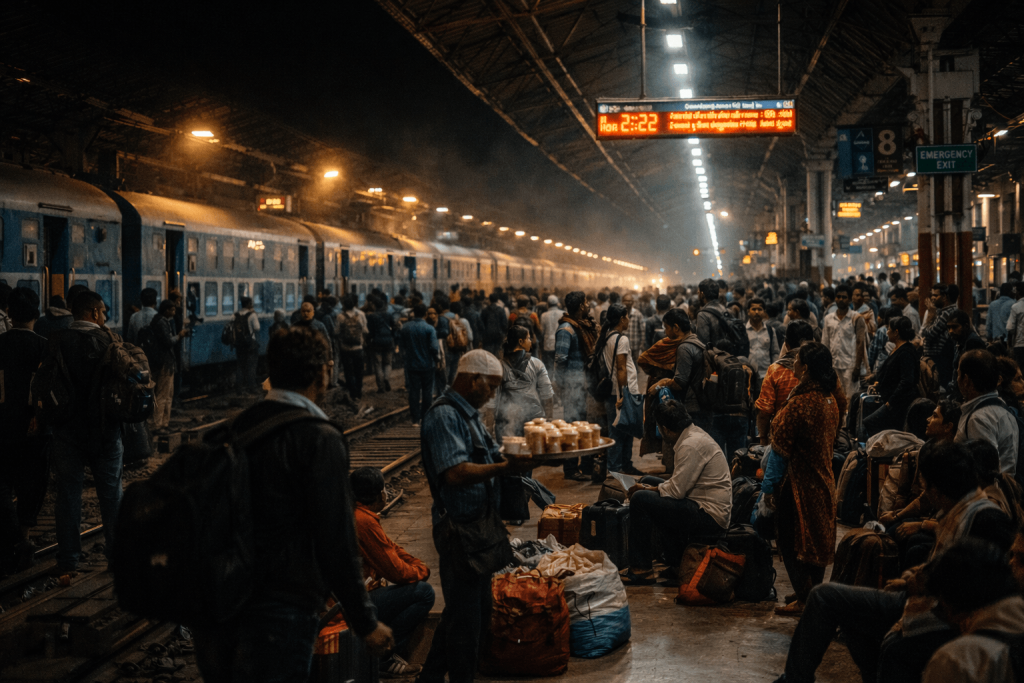
Large stations at sunset experience distinct energy. Vendors move briskly. Families gather on platforms, with meals packed in stainless steel containers. Students browse their smartphones while securing backpacks.
Night departures typically mean trains depart between 8 pm and midnight. Arriving 30 to 45 minutes early is typically enough for all stations. The coach-position display boards are crucial because platforms can be hundreds of metres long.
You might be aware that night trains are typically more packed than daytime trains. It’s simple economics. Night trains save an entire day as well as one night of lodging.
Inside the Coach: The First Hour
The first hour of travel is typically about small talk. The passengers adjust their bags. Someone examines whether the middle berth is required to be open. Another passenger confirms seat numbers.
The sleeper class or the AC 3-tier are two popular choices for overnight travel. The sleeper class has open windows with natural, fresh air. AC coaches can help control temperature and offer more privacy. The difference is not only in comfort but also in noise level.
You’ll hear the constant track clank as conversations settle down and tea vendors make final rounds before the lights go out. It might seem chaotic at first; however, the system can work by repeating.
Food Before Sleep
A few passengers take food items they have brought from their homes. Others purchase food from the station vendor before departure. Pantry services are offered along many long routes; however, the options aren’t always great.
It is recommended to eat a meal before the train speeds up. After the lights have gone off, berths are set, and the train is moving, it can be difficult. Simple meals work best. A heavy diet can make it difficult for a coach to sleep.
The water bottles must be kept in proximity. A climb down from a higher deck at night is not optimal.
Slumbering on a Moving Train
Sleep quality is contingent upon expectations. The gentle rumbling of the train can help some individuals fall asleep fast. Some require some time to adjust to the background noise and occasional station stops.
Beds in AC coaches have bedding on long journeys in most cases. In sleeper classes, you’ll carry your own bedding or sheet. Keeping valuables in a secure place, typically in a small, padded bag that doubles as a pillow, is a common practice.
Trains stop at a variety of stations throughout the night. It is possible to wake up briefly as new passengers arrive or the train slows. Over time, most travellers adapt to the pace.
Wake Up Every Day Somewhere New
There’s something unique when you wake up on a train. The curtain is pulled back, or gaze through the window to see the landscape that you didn’t get to sleep in.
It could be mustard fields in North India, coconut groves in the South, or the industrial outskirts of a large city. Tea vendors start their treks early, usually before sunrise. A cup of tea you drink on the train travels more than a cup at home.
If your train runs on time, you could arrive just before sunrise. This time is convenient. You get out, search for transportation, and then begin your day without missing any hours.
The Economics of Overnight Travel
The cost of an overnight train is usually considerably less than flying the identical route. For many corridors under 1,200 km, sleeper and AC 3-tier tickets are available, compared with flights booked near departure.
There’s also a hidden benefit. A single night of savings in hotels can lower the cost of your trip overall. For families, students, and solo travellers, it makes long-distance travel more feasible.
Railways transport over 20 million passengers each day across India. Many of them rely on overnight trains to balance their studies, work, and family obligations.
The Social Side of the Trip
Unlike flights, train compartments encourage interaction. There is the possibility of sharing food with a friend who is heading home to attend the wedding. A student might discuss exam plans. An elderly person may tell stories about past trips.
Conversations aren’t 100% guaranteed, but they occur often enough to create memories. In the same way, privacy is protected. If you’d rather be in peace, then you can shut your curtain of berths and take a break.
Overnight trains are transformed into small, temporary communities. By morning, everyone disperses in different directions.
What Should First-Time Travellers Keep in Mind?
Make sure your luggage is compact and secure it in the back of your seat, if you can. Keep a small key for added security.
Charge devices before taking off, since charging points may be shared.
Set an alarm for your time of arrival, particularly in the event that your station arrives early in the morning.
Make sure to check the platform information upon arrival, as some trains may stop briefly.
These little habits can help make the experience more enjoyable.
Between Two Cities: A Night on an Indian Train
A train ride that is overnight in India isn’t a luxury experience. It’s practical, efficient, reliable, and grounded in daily life. It can be a bit noisy, crowded and at times unpredictable. However, it is an authentic way of moving around India.
You sleep in one city, and then awake in another with the solitary memories of a night shared with strangers who were a part of your story for just a couple of hours.
If you approach the issue with realistic expectations and basic preparation, it is less about hassle than about understanding why millions of people travel each day.